



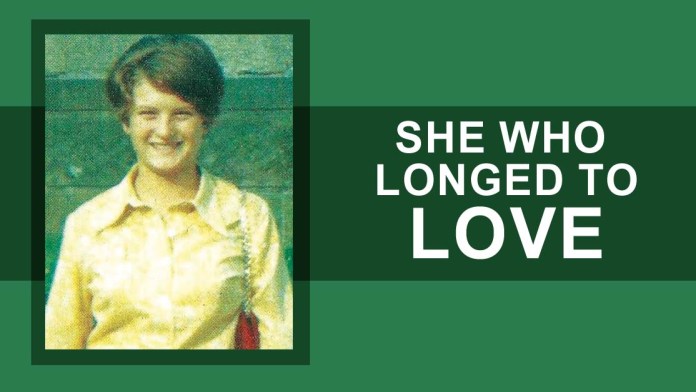
Maria Orsola Bussone
“I want to share with you what I have learned. I have come to understand that the key to happiness is the Cross. It is true that when crosses came my way, I was unable to overcome them, and I fell. Yet now I understand that the key to happiness is the Cross. Chiara, do you know that I always want to love? I must love, love, and love. I must love without expecting anything in return. I want to allow myself to be used as God desires. I want to do my part fully, because that is the only thing of value in life.”
These are the words of Blessed Maria Orsola Bussone in a letter to Chiara Lubich, the founder of the Focolare Movement. Maria was born on 2 October 1954 in Vallo Torinese, in the Province of Turin, Italy. Her father, Umberto Bussone, worked in a workshop, while her mother, Luigina Bussone, was a seamstress. She also had a younger brother named Giorgio.
From an early age, Maria grew up with an extraordinary love for God. Her life was centred on the Church from childhood. Besides being a member of the choir, she was also active in the youth wing of Catholic Action. Maria was a girl who wanted to rejoice in every moment of life, but she desired to experience all her joys in union with God. It would be wrong to assume that she stayed away from other pleasures simply because she was known as a devout girl. She enjoyed swimming, roller skating, skiing, and cycling. She also had many friends.
2 June 1967 was a special day in her life, for it was then that she came into contact with the Focolare Movement. Maria was deeply attracted to its spirituality. Focolare was a spiritual movement founded by Chiara Lubich. Its ideal was that love for others should not remain merely an idea but should be put into practice in everyday life. Through her involvement in the movement, Maria came to understand that authentic Christianity meant more than observing religious customs and practices. It meant treating those around us with love and helping them in their needs.
Maria wholeheartedly embraced a spirituality centred on the abandoned Christ. Her diary entries reveal her desire to make every action a reflection of God’s love. Another dimension of her spirituality was her willingness to offer both the joys and sorrows of life to God and not to turn away from Him when difficulties arose. Maria believed that God alone could bring her true happiness and that God’s love was what gave genuine meaning to every aspect of life.
On 3 July 1970, Maria set out with a group of young people, including her brother, to attend a camp at Ca’ Savio, near Venice. Neither Maria nor those who loved her knew that this would be her final journey. Tragically, that is what happened. The accident occurred on the last day of the camp. On 10 July, Maria died from an electric shock caused by a hairdryer. She was only fifteen years old.
There was no prolonged struggle with illness and no martyrdom for the faith. Maria’s life ended in an unexpected accident. It was only after her death that others came to realise the depth of her spirituality, her life of faith, and her love for God. Her diary and letters revealed these qualities. To an outside observer, she appeared to be an ordinary girl. Yet within her was a profound love for God and for her fellow human beings. For Maria, faith and spirituality were neither commodities to be traded nor something to be displayed for recognition. Recognising this, Pope John Paul II held her up as a model for young people when he visited Turin in 1988. In 1996, the Church officially began investigating her life of holiness. The diocesan inquiry was completed in 2000, and on 18 March 2015, Pope Francis declared Maria Venerable.
Maria demonstrated the remarkable art of placing Jesus at the centre of relationships between people. Having loved God to the fullest extent possible in her brief fifteen years, Venerable Maria Orsola Bussone remains a model for all young people. Her life is a beautiful example of how one can live an ordinary life while pursuing holiness.
Vinayak Nirmal
