



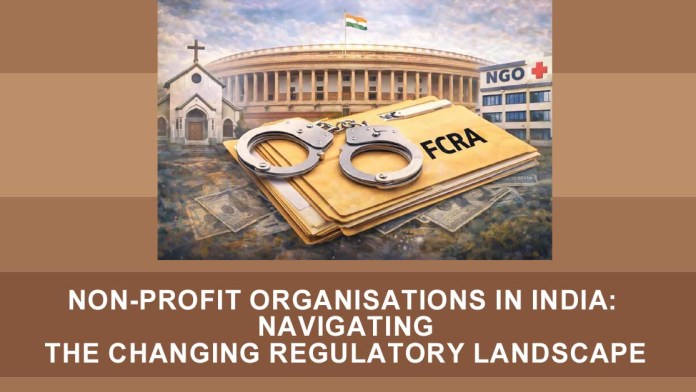
Non-Profit Organisations (NPOs) occupy a distinct and indispensable position in India’s socio-economic landscape, complementing Government efforts by addressing a wide range of social, educational, cultural, healthcare and developmental needs—especially for underprivileged and vulnerable communities. Collectively, these organisations serve key public-interest areas such as education and early childhood care, arts, culture and heritage, rural development, healthcare and nutrition, and livelihoods and skill development, among many others. NPOs have historically supplemented governmental efforts and facilitated community participation in development.Top of FormBottom of Form
The term “NPO” does not, by itself, denote a single legal form or registration in India. An organisation pursuing charitable or not-for-profit objectives may be constituted as a public charitable trust, a society registered under the applicable Societies Registration law, or a Section 8 company under the Companies Act, 2013. As per the NGO Darpan database, India had 5,94,478 active NPOs as on July 30, 2026, comprising 2,96,452 Trusts, 2,44,261 Societies and 53,765 companies registered under Section 8 of the Companies Act, 2013 (earlier Section 25 of the Companies Act, 1956). Kerala alone accounted for 16,781 active NPOs—9,525 Trusts, 6,458 Societies and 798 Section 8 companies—figures that highlight both the scale and the significance of the sector.
Funding and Taxation of NPOs
The sustainability of the non-profit sector depends largely on its ability to mobilise financial resources. In India, Non-Profit Organisations (NPOs) are funded through voluntary donations, philanthropic contributions, grants, Corporate Social Responsibility (CSR) initiatives, government assistance, membership subscriptions, income from permissible activities and, where permitted, foreign contributions.
From a taxation perspective, charitable and religious institutions are eligible for tax exemptions subject to registration and compliance with prescribed conditions. Under the Income-tax Act, 1961, exemptions were available under the Section 11/12AB and Section 10(23C) regimes. The Income-tax Act, 2025 has reorganised this framework by providing for registration of eligible NPOs under Section 332.
Cap on Commercial Receipts
Although NPOs may earn income from activities incidental to their charitable objects, organisations engaged in the “advancement of any other object of general public utility” (GPU) may lose the benefit of tax exemption if receipts from trade, commerce or business exceed 20% of their total receipts during the relevant tax year. This restriction does not apply to religious institutions.
The exemption regime is accompanied by a robust compliance framework. NPOs must maintain registration, apply at least 85% of their income during the year, comply with conditions relating to accumulation and investment of funds, maintain proper books of account, undergo statutory audit where applicable, and file the prescribed returns. Organisations seeking to enable donors to claim tax deductions must also obtain approval under Section 80G(5) of the Income-tax Act, 1961 (corresponding to Section 354 of the Income-tax Act, 2025).
Thus, although NPOs do not operate with a profit-distribution motive, they function within a comprehensive legal and regulatory framework that places considerable emphasis on financial accountability, tax compliance, transparency and good governance.
Foreign Contribution and the FCRA Framework
Unlike domestic funding, foreign contributions are governed by a separate and highly regulated statutory framework. Non-Profit Organisations (NPOs) cannot receive foreign contributions without registration or prior permission under the Foreign Contribution (Regulation) Act, 2010 (FCRA). The receipt, utilisation, banking, accounting and reporting of such contributions are subject to strict compliance with the Act and the Rules framed thereunder.
The FCRA framework has progressively become more stringent. The original FCRA, 1976, enacted to regulate foreign contributions in the national interest, was strengthened by the 1984 amendment, which made registration with the Ministry of Home Affairs mandatory. The FCRA, 2010 replaced the earlier law with a more comprehensive compliance regime, which was further tightened through the 2020 amendments by introducing mandatory Aadhaar/passport identification of office-bearers, routing all foreign contributions through a designated SBI branch in New Delhi, prohibiting sub-granting of foreign contributions, reducing the administrative expenditure limit from 50% to 20%, and extending the suspension period. The 2022 Rules also increased the reporting threshold for contributions received from relatives abroad from ₹1 lakh to ₹10 lakh.
The Government has also adopted a rigorous approach towards FCRA registration. According to the Ministry of Home Affairs, 22,496 registrations have been cancelled and 15,220 have expired or were not renewed. As on July 30, 2026, only 14,440 organisations hold valid FCRA registrations, including 1,013 organisations in Kerala, reflecting the increasingly compliance-driven administration of the law.
The regulatory framework has undergone another significant reform in 2026. While the Foreign Contribution (Regulation) Amendment Bill, 2026, is presently under consideration in Parliament, the FCRA Rules, 2026, notified on June 22, 2026, are already in force. The Rules introduce activity-specific and State/UT-specific registration, expand the definition of “key functionary”, prescribe additional disclosures in Form FC-4, require organisations to specify their approved geographical areas and activities, and make renewal contingent upon utilisation of at least ₹10 lakh of foreign contribution during the preceding two financial years. Existing FCRA-registered organisations have also been given time until June 21, 2027 to file Form FC-6F specifying their approved purposes and operational areas.
While the FCRA seeks to safeguard national interest and ensure transparency and accountability in the utilisation of foreign contributions, its increasingly rigorous compliance framework has also generated concerns among genuine charitable organisations. It is often felt that strict procedural requirements may, in some cases, adversely affect organisations with an established record of public service, thereby posing challenges to the effective functioning of the voluntary sector.
The Proposed 2026 Amendments A Matter of Concern
The proposed amendments presently before Parliament raise concerns that extend beyond routine regulatory compliance, particularly for genuine Non-Profit Organisations (NPOs) receiving foreign contributions for bona fide religious and/or charitable purposes. While greater transparency and accountability are essential, certain proposals may have disproportionate operational consequences for otherwise compliant organisations.
Procedural lapses, delays in renewal, suspension of registration, or adverse classification could restrict the receipt and utilisation of foreign contributions and, in certain cases, even affect control over assets created from legitimate foreign donations. The tighter compliance framework may also increase administrative costs, disrupt programme continuity, create donor uncertainty, and divert valuable organisational resources from public service to regulatory compliance and risk management.
The principal concerns are summarised below:
1. Risk of Loss of Control over Legitimately Acquired Assets
The Bill proposes a mechanism under which a Designated Authority may take over, manage and, where necessary, dispose of unutilised foreign contributions and assets created from foreign contributions in specified circumstances. This may result in organisations losing control over assets such as land, buildings, vehicles, equipment and other infrastructure created over several years, even where the organisation has acted bona fide and the adverse action arises from procedural or technical non-compliance rather than any misuse of funds.
2. Disproportionate Consequences of Renewal Delays
Delays in renewal, whether arising from administrative reasons or procedural deficiencies, may have serious operational consequences. A genuine NPO could find itself unable to receive or utilise foreign contributions, not because of any wrongdoing, but owing to technical or timing-related non-compliance.
3. Uncertainty Regarding “Defunct” or “Inoperative” Status
The proposed framework does not clearly define the circumstances in which an organisation may be regarded as “defunct” or “inoperative”. Temporary inactivity due to project cycles, restructuring, leadership transition or pending litigation could potentially expose an organisation to restrictive consequences.
4. Operational Disruption During Suspension
Restrictions on dealing with assets during the period of suspension may affect routine activities such as maintenance, repairs, insurance renewal and safeguarding of assets. This could interrupt ongoing projects and adversely affect beneficiaries.
5. Risk of Funds Remaining Unutilised
Where utilisation of foreign contributions received under prior permission is linked to prescribed timelines, delays caused by factors beyond the organisation’s control, such as regulatory approvals, natural calamities, supply-chain disruptions or litigation, may result in funds remaining unusable and expose the organisation to unintended non-compliance.
6. Chilling Effect on Donors and Governance
The possibility of tighter regulatory action, including vesting or disposal of assets, may discourage foreign donors from supporting Indian charities and deter competent professionals from serving as trustees or office-bearers because of increased fiduciary and reputational risks.
7. No Hearing or Appeal on denial of Registration or Renewal
A significant concern is the absence of a clear statutory requirement to provide an opportunity of being heard before refusal of registration or renewal, and the lack of a specific appellate mechanism against such decisions. Consequently, an organisation may not only lose the ability to receive future foreign contributions but may also face restrictions affecting the continued control and use of assets created from past foreign funding.
8. Limited Remedies and Costly
Litigation
Although an appeal to the District Judge is available in certain cases, litigation is often expensive and time-consuming. During prolonged legal proceedings, the organisation’s programmes, finances and beneficiaries may suffer.
9. Crediting Funds to the Consolidated Fund of India
The proposal to credit unutilised foreign contributions or sale proceeds to the Consolidated Fund of India could defeat the intention of donors who contributed funds for specific charitable purposes. Such a provision may also adversely affect donor confidence and the credibility of the organisation.
10. Wide Regulatory Discretion
Several provisions of the proposed framework depend upon matters to be “prescribed” or “notified”. This may result in a situation where significant aspects of the regulatory framework are effectively determined through subordinate legislation and administrative directions, thereby conferring wide discretionary powers on the executive without corresponding legislative scrutiny. Excessive reliance on delegated legislation and administrative discretion may result in inconsistent interpretation and uneven application across similarly placed organisations.
11. Complexity in Determining Asset Ownership
Many assets of NPOs are funded partly through domestic resources and partly through foreign contributions, or are used across multiple projects. Determining whether an asset has been created wholly or partly out of foreign contributions may therefore become contentious, leading to disputes, uncertainty and possible restrictions on its use.
Conclusion
The cumulative effect of these proposals is likely to be felt most acutely by small and medium-sized NPOs, many of which operate with limited administrative capacity and without specialised legal or compliance support. There is a genuine concern that organisations driven primarily by public service may increasingly be compelled to devote scarce resources to regulatory compliance and litigation rather than to the charitable activities for which they were established.
CA Babu Abraham Kallivayalil
