

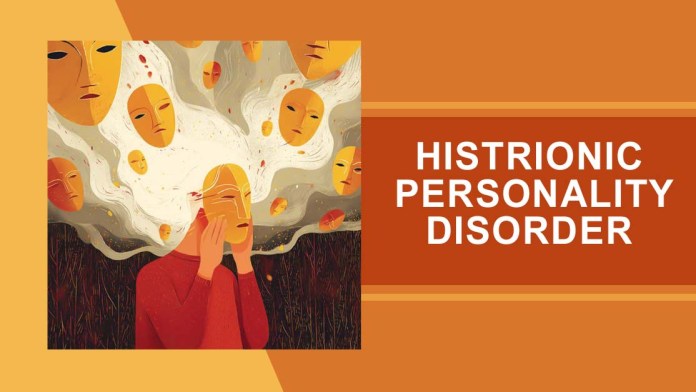
Histrionic Personality Disorder

Published on

Individuals with Histrionic Personality Disorder have a strong and constant need to gain the attention and approval of others. They often behave in a dramatic manner and express emotions in an exaggerated way. They may also attempt to attract attention through sexually provocative dressing and behavior. As a result of poor or impulsive decisions, they frequently find themselves in problematic situations.

Symptoms

They often display uncontrollable anger and stubbornness. A fear of being left alone and an excessive dependency on others are commonly seen in them. They tend to exhibit unstable behavior, frequently changing what they say from one moment to the next. They can be highly skilled at lying and convincingly presenting falsehoods as truth. Exaggeration in all matters, imagining and presenting self-created situations as reality, and attempting to make others believe these as true are notable traits.

They may show a tendency to do anything to achieve personal goals, feign illness to gain attention and care, and even threaten suicide. Their behavior is unpredictable—one moment they may speak cheerfully, and the next moment they may erupt without any apparent provocation. Their emotional expressions toward others are often superficial and outwardly exaggerated.

They also tend to shift the blame for their own weaknesses and failures onto others. They are capable of building relationships effectively for personal gain, often with clear underlying motives. While they may display sharp analytical abilities, their interpretations are usually influenced by their own interests.

Causes

There is no single cause for this disorder; rather, it arises from multiple factors. Genetic and environmental influences, lack of attention during childhood, excessive encouragement of dramatic behavior in early years, psychological factors such as low self-esteem and an intense need for approval, and abnormal behavioral patterns of parents can all contribute to the development of this disorder.

Psychological Approaches

For individuals diagnosed with this condition, Cognitive Behavioral Therapy (CBT) can be beneficial in helping them regulate emotions, develop genuine relationships, and increase self-awareness. There is no specific medication for this personality disorder. However, if comorbid conditions such as severe anxiety or depression are also diagnosed, the assistance of a mental health professional is necessary.


Rev. Dr. Sijon Kuzhikkattumyalil

Latest Updates

POPULAR Views

FEATUERD Views

Alcohol Dependence: Symptoms and Clinical Perspectives

When can a person be considered alcohol dependent? A diagnosis of alcohol dependence can confidently be made when an individual exhibits at least three of the following symptoms: an...

Anti-Social Personality Disorder

Anti-Social Personality Disorder is observed more commonly in men. When antisocial behavioral tendencies in children, often manifested as Conduct Disorder, are not corrected at an early stage, they frequently...

Psychological Treatment Approaches to Overcome Alcohol Dependence

Alcohol dependence (Alcoholism) refers to a condition in which drinking goes beyond a person’s control. The primary feature of addiction is loss of control-drinking excessively and compulsively.

Narcissistic Personality Disorder

An excessive sense of “I” or self-centeredness is the core feature of the personality disorder known as Narcissistic Personality Disorder (NPD). People with this condition tend to think that...

Borderline Personality Disorder

Borderline personality, or unstable personality, is seen more frequently among women between the ages of eighteen and thirty-five. Those with this disorder are often in a state of constant...

Paranoid Personality Disorder – Facts

The term paranoid refers to individuals who are excessively suspicious by nature. They harbour doubt toward everything and everyone. Even when someone says or does something good, they tend...

Recognizing Panic Disorder

Studies indicate that about 1.5% to 3.5% of the population may experience problems caused by panic disorder at some point in their lives. Women are twice as likely to...

Post-Traumatic Stress Disorder (PTSD)

When a person experiences an extremely intense stress situation, psychological problems may arise in two ways. In some cases, it is caused by a single, sudden, unusual event of...

Obsessive-Compulsive Disorder: Facts

Obsessive-Compulsive Disorder (OCD) begins with the presence of repeated, intrusive, and unwanted thoughts that dominate a person’s mind in a way that they are unable to control, despite trying...

Excessive Anxiety and Treatment

Generalized Anxiety Disorder (GAD) is a condition that more than three percent of people in society are likely to experience at least once in their lifetime. Typically beginning around...

Schizophrenia: The Realities

Among mental illnesses, psychotic disorders (psychosis) are a category of serious conditions. These are illnesses where the patient does not have the insight to recognize that they are unwell....

Delusional Disorder: Facts to Recognize

Delusional Disorder, also known as paranoia, is a condition in which a person strongly believes something false to be true and continues to hold that belief even when presented...