


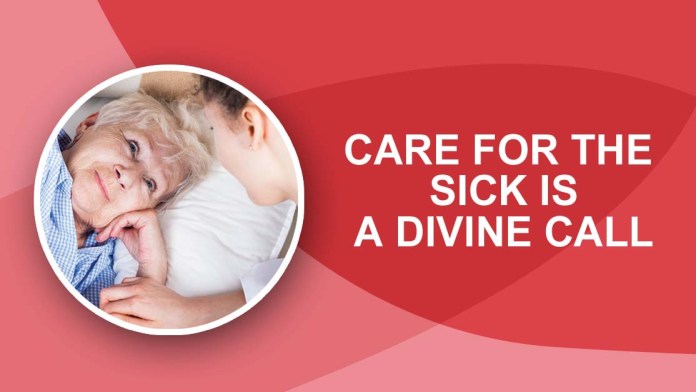
It was in 1992 that Pope John Paul II called for February 11, the feast day of Our Lady of Lourdes, to be observed as the Day of the Sick in the Church. Since then, the Catholic Church has been observing February 11 as a day of remembrance for the ministry to the sick. On this day, the Church primarily emphasizes three aspects: food for the sick, medicine, and the mindset and willingness to take up care.
There are families who cannot even fulfil the first two of these. Even when the first is fulfilled, there are circumstances where the third and most important aspect is neglected. If a family has a chronically ill person, there is a possibility that everything, including the family’s financial circumstances, can be disrupted from normal conditions. We should be able to extend a helping hand to such families. There are many religious congregations and institutions that have chosen care for the sick as their primary charism. We should also be willing to help them as much as possible.
There is a high possibility of despair entering the mind when one remains sick for a long time or becomes bedridden. We should be able to give such patients a message of hope through our presence, interactions, and words. Similarly, patients should be able to view their illness with hope. The illness should be seen from a salvific perspective as a sign of our participation in the Lord’s suffering. The Church asks us on this Day of the Sick to recognize the face of the Lord in the sick. It was through the apostolic letter Salvifici doloris that the Pope taught about the importance of the Day of the Sick.
Pope Benedict XVI resigned on February 11, 2013. What prompted the Pope to choose that particular day? It cannot be considered that the Pope chose just any day. The resignation came from the realization that he was ill and would not be able to smoothly carry forward the responsibilities as the head of the universal Church. However, it was never a despairing act.
We all know the connection between Our Lady of Lourdes and the Day of the Sick. Lourdes and the water from the grotto spring in Lourdes are places where the Church has found the most signs of healing. For how many sick people has Lourdes become comfort and consolation! Many receive miraculous healing. Even if we cannot give healing to others, we can be those who provide comfort and consolation during times of illness.
Treat the sick with compassion. Visit those who are sick occasionally and care for them as much as possible. A person who is healthy today may become sick tomorrow. The saying “today me, tomorrow you” applies not only to death but also to illness. Therefore, care for the sick with the awareness that tomorrow I too might become ill. Remember that we can only care for them lovingly when we can see Christ’s face in each sick person. Remember Mother Teresa, who undertook and carried out care for the sick in the best way in this century.
Let us offer all those who are in sickness to God’s presence and pray, and also pray that those who have undertaken the care of the sick be strengthened.
Major Archbishop Mar Raphael Thattil
