



God’s desire and dream for us is that each of us may become holy. As St. Paul reminds us, “God has not called us for impurity, but in holiness” (1 Thess. 4:7). Yet how many among us truly long to become a saint? How many pray, “Lord, make me holy”? When we pray for so many other intentions in life, it seems very few pray for the grace to grow in holiness.
One reason is that our understanding of holiness is often distorted or limited. We may even feel trapped in misconceptions about holiness. And we cannot entirely be blamed, for many lives of saints that we venerate often present to us an image of holiness as extraordinary suffering or martyrdom. For instance, St. Devasahayam Pillai, declared Patron of the Laity in India by Pope Leo XIII, endured immense physical and mental torment before attaining sainthood. In the early centuries, martyrdom and religious persecution became the path to sanctity for many.
But in today’s world, such ideas of holiness need to be reinterpreted. We are now witnesses to this shift. A clear example is the recent canonization of Carlo Acutis and Pier Giorgio Frassati by Pope Francis. These young saints, a teenager and a young adult, give us great hope. While living in this world, they lived in a way that was not of this world. Their lives remind us that we are called not to look around us, but, in Frassati’s own words, to “look to the heights.”
From Carlo’s life, we also learn that modern technology must be used for God and for the spread of the Gospel. Carlo lived in a time of growing digital progress, yet today technology, including artificial intelligence, has advanced even more dramatically. It is our responsibility to harness these tools for the good of humanity and for evangelization. Sadly, many use them for evil or to harm others. Social media has created an environment where people feel free to say anything against anyone, to raise baseless accusations. Such misuse is alarming. Here, too, the life of Blessed Carlo Acutis becomes a model, urging us to rethink and correct these tendencies.
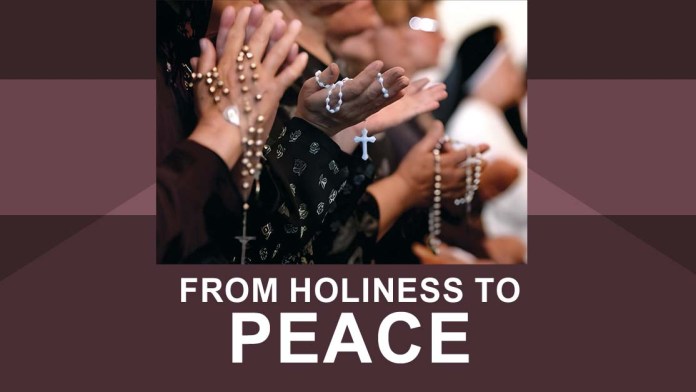
October is a very special month for us. In our homes, churches, convents, and communities, we dedicate this month to praying the Rosary more fervently. Pope Leo XIII asked that during this month we pray the Rosary especially for peace. At a time when unrest and conflict are growing in both Church and society, this call is all the more relevant. We invoke Mary as the Queen of Peace; through our Rosary prayers in October, we firmly believe she will dispel the powers that cause division and unrest.
Let us not forget, along with our personal intentions, to pray for peace. And let us also pray for holiness. The Church needs to be sanctified more deeply, and we each need to grow in holiness. May we journey from holiness into peace.
Major Archbishop Mar Raphael Thattil
