


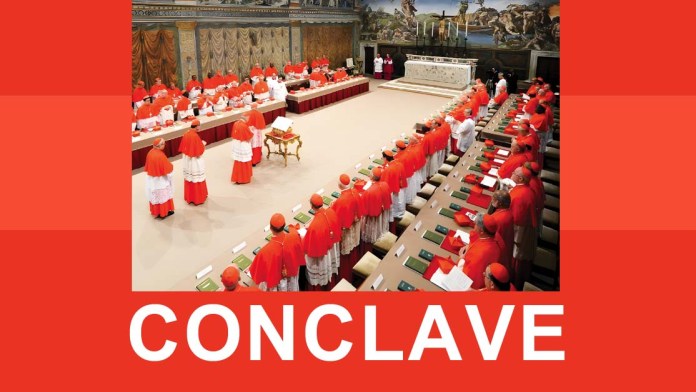
The election of the Pope, the successor of Peter, the Bishop of Rome, and the head of the Catholic Church, takes place through a highly secretive gathering. This gathering of the Cardinals is known as the Conclave. The word Conclave comes from Latin, meaning “with the key.” After the death of the Pope, when the Conclave begins, the Sistine Chapel is locked from the outside, and the Cardinals remain inside until a new Pope is elected. The Cardinals responsible for electing the next Pope follow procedures and regulations that have been in place since the Middle Ages, although some changes and additions have been made over time.
Most of the current regulations followed in the election are outlined in the Apostolic Constitution Universi Dominici Gregis, promulgated by Pope John Paul II in 1996. Later, Pope Benedict XVI also introduced certain modifications. Once the date for the Conclave is set, the Cardinal-electors gather at the Sistine Chapel in the Vatican. They stay there until someone is elected with a two-thirds majority. Let’s take a look at the process:
1. The Arrival of the Cardinals
Technically, any Catholic male could be elected Pope. However, the elected person must be consecrated a bishop before he is declared Pope. Since 1379, only Cardinals have been elected as Pope. Although there are more than 250 Cardinals worldwide, only those who are under 80 years of age on the day the Apostolic See becomes vacant are eligible to vote. This time, there are 135 eligible Cardinal-electors: 53 from Europe, 23 from Asia, 23 from Latin America and the Caribbean, 18 from Africa, 14 from North America, and 4 from Oceania.
While many Cardinals live and work in the Vatican, the rest are engaged in ministries across the globe. Unless prevented by illness or another serious reason, all eligible Cardinals must travel to Rome.
2. The Procession to the Sistine Chapel
On the first day of the Conclave, in the morning, the Cardinals celebrate a special Mass at St. Peter’s Basilica. In the afternoon, they gather in the Pauline Chapel, sing the hymn to the Holy Spirit (Veni Creator), and process to the Sistine Chapel. Following the Pope’s death, the most powerful person in the Vatican is the Camerlengo. Although the Camerlengo oversees all Conclave arrangements, he does not enter during the voting process. Supervision inside the Chapel is the responsibility of the Dean of the College of Cardinals, or in his absence, the most senior Cardinal.
3. The Oath
Before voting, all Cardinals take an oath to maintain the secrecy of the election:
“I, (first name) Cardinal (last name), do promise, pledge, and swear. So help me God and these Holy Gospels which I touch with my hand.”The oath is administered in order of seniority. After the oath, the Master of Papal Ceremonies announces Extra omnes (“Everyone out!”), and only Cardinals remain inside the Chapel. Until a new Pope is elected, no one else will see them. To ensure secrecy, no mobile phones, emails, or internet connectivity are allowed inside the Sistine Chapel. Since 2013, signal blockers have also been installed.
4. The Voting
Voting sessions take place twice a day: morning and afternoon. In each session, nine Cardinals are selected for specific duties: three scrutineers (vote counters), three to collect votes from sick Cardinals, and three revisers.
Each Cardinal receives a ballot paper with the phrase Eligio in Summum Pontificem (“I elect as Supreme Pontiff”) printed on it, where they secretly write the name of the candidate they wish to elect. Approaching the altar, they declare:”I call as my witness Christ the Lord who will be my judge, that my vote is given to the one who before God I think should be elected.” They then place their folded ballot into the designated urn. If a Cardinal is ill, he can vote from his room using a secured box.
5. The Counting of Votes
After all votes are cast, the scrutineers count and record the number of ballots. If the number doesn’t match the number of voters, the ballots are burned without opening, and a new round of voting occurs. If the number is correct, the first scrutineer opens each ballot, records the name, and passes it to the second and third scrutineers. The third scrutineer reads the name aloud for all to hear.
After reading, the ballot papers are threaded together with a needle through the word Eligo (“I elect”).
Within the first four days, up to four votes (two in the morning, two in the afternoon) can take place each day. If no Pope is elected within four days, there is a pause for a day of prayer, reflection, and informal discussion. After this break, voting resumes for another seven rounds. If a deadlock persists, only the two candidates with the most votes will remain on the ballot, and the one who receives a simple majority will be elected.
6. The Smoke Signals
The only clue to outsiders about the voting is the smoke from the Sistine Chapel chimney, after each session. If black smoke appears, it means no decision has been made. If white smoke appears, it means a new Pope has been elected. The color is achieved by mixing chemicals with the burned ballots.
7. Habemus Papam (We have a Pope)
Once a Pope is elected, the Dean of the College of Cardinals, or the most senior Cardinal, approaches the elected candidate to ask whether he accepts the election and what Papal name he chooses. The new Pope then goes into the Room of Tears, a small room near the Sistine Chapel, where he dons the traditional papal vestments — prepared in three sizes to fit any elected individual.
After donning the vestments, he returns to the Cardinals. A portion of the Gospel is read aloud, a prayer is said, and the Cardinals express their love and respect for the new Pope.
Meanwhile, the Protodeacon Cardinal appears on the balcony of St. Peter’s Basilica and announces in Latin: “Annuntio vobis gaudium magnum; Habemus Papam!” (“I announce to you a great joy; We have a Pope!”)
8. To the City and to the World
Soon after, the new Pope steps onto the balcony framed by red drapes and delivers his first Apostolic Blessing, known as the Urbi et Orbi (“to the City and to the World”).
Thus ends the intricate process of the Conclave. In the following days, the new Pope participates in the inauguration Mass held at St. Peter’s Basilica and formally assumes the responsibilities as the head of the Catholic Church.
